
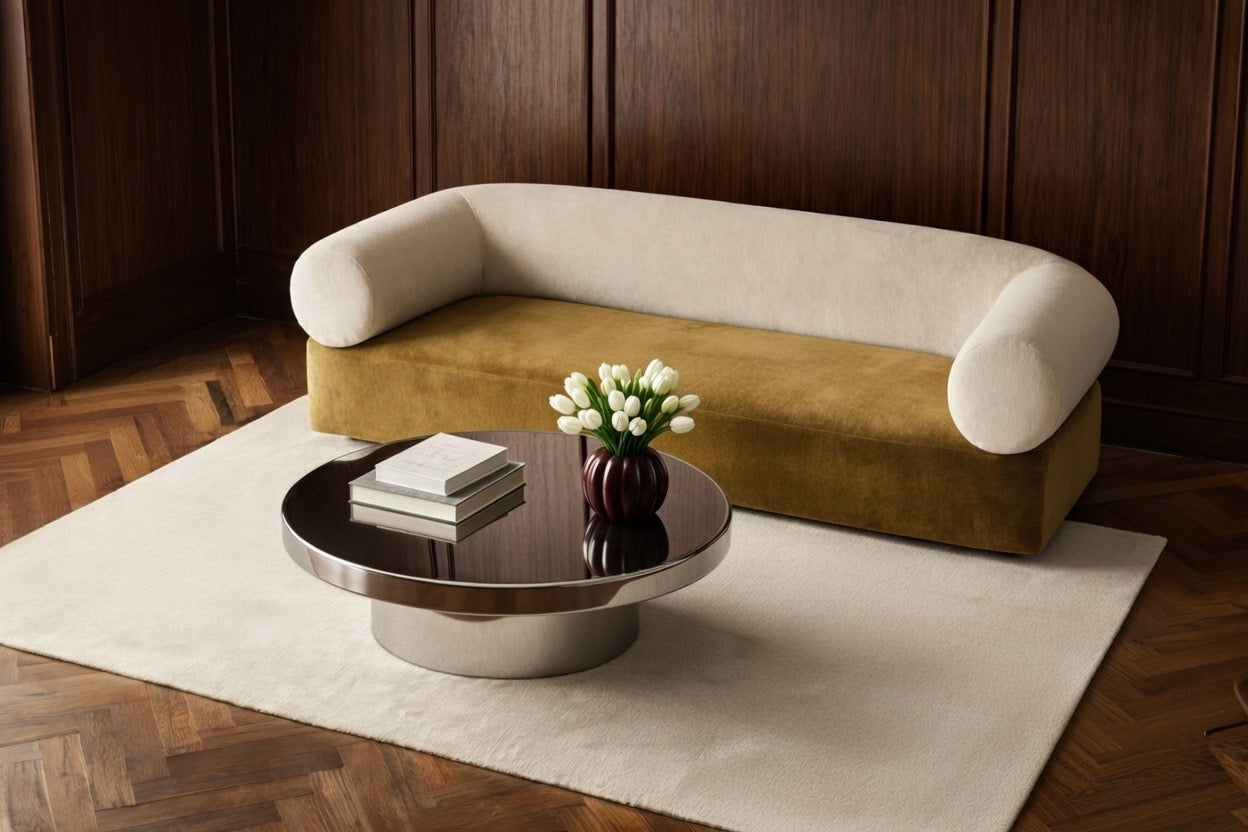
Yes. Saint Objets accepts COM (Customer's Own Material) on made-to-order pieces. Before cutting we review the roll against four gates: abrasion (aim for a high double-rub or cycle count appropriate to the use, roughly the accepted residential range for seating and the higher contract range for hospitality), cuttable width, pattern repeat, and whether the fabric needs a backing to hold an upholstered shape. For hospitality work in the UAE we require fire performance to the relevant standard for the setting in OEKO-TEX certified fabric, before the piece is scheduled. Without it we specify a compliant alternative alongside your fabric.
A specifier does not need reassurance, they need thresholds. Here are the numbers we work to.
Abrasion: the first gate.
Ask for the rub count and the test method. The two common methods report differently, one in double rubs and one in cycles, and they do not convert cleanly, so always send both the figure and the method it was measured by.
As working minimums: residential seating from the accepted lower residential range; heavy-use residential and light contract a step above that; hospitality and high-traffic contract higher again. A fabric below the residential threshold can still be right for a headboard, a bedhead panel or a low-contact occasional chair, but it is the wrong choice for a daily seat and we will say so before it is cut.

Width, and why it changes the cut.
Upholstery fabric commonly runs 137cm (54 inch), the standard on much of the market. European decorative widths often arrive at 140cm, and railroaded or wide-width goods can run to 280 to 300cm, which lets a bench or a long sofa back be cut in a single seamless pass rather than pieced.
The number that matters is the cuttable width, not the roll width, because selvedge and any printing margin come off the top. Confirm cuttable width before yardage is calculated, not after.
Repeat, and a worked yardage example.
Pattern repeat drives meterage more than most people budget for. A plain or a small all-over on a three-seat sofa sits at roughly 14 to 16 metres. Introduce a 64cm vertical repeat that has to be matched across the back and centred on each seat cushion and the same piece can climb to 18 to 20 metres, because every panel is cut to the repeat, not to the tightest nesting.
Railroaded versus up-the-roll orientation changes both the cut and where seams fall, so orientation has to be fixed before the fabric is ordered, not on the cutting table.
Overage rule.
We build in overage rather than hoping the roll stretches.
- Plain and small-repeat fabric: add 10 to 15 percent.
- Repeats over 30cm, motif-centred cushions, or directional and one-way fabric: add more, and we give you the figure once the frame and repeat are fixed.
All overage should come from a single dye lot. A dye-lot shortfall mid-build is the one event that genuinely stalls a piece, because a second lot rarely matches and re-ordering resets the queue.
The COM spec-card to send with the fabric.
Send this with the roll and the review is same-day rather than a week of back-and-forth:
- Fibre content by percentage (for example 100 percent polyester, or 88 percent viscose 12 percent linen)
- Weight in gsm or oz per linear/square yard
- Roll width and cuttable width
- Horizontal and vertical repeat in cm
- Railroad or up-the-roll orientation
- Any finish or backing already applied by the mill (stain finish, knit or acrylic backing, latex)
- Fire performance, and the standard the fabric is tested against
- Dye-lot number and the exact quantity on the roll being sent
If a field is unknown, tell us it is unknown rather than leaving it blank. A missing width or repeat stops the yardage calculation cold.
Fire performance: the biggest COM gate for UAE hospitality.
This is the question most specifiers are really asking. For hospitality and short-let work in the UAE, upholstery has to satisfy the fire performance required for the setting, and the evidence behind the pass matters as much as the pass itself. In practice a specifier will meet several regimes: cigarette and match ignition sequences, contract flammability requirements for public-assembly spaces, and the local fire and life-safety requirements that apply to guest-facing furniture. The applicable requirement is whatever the project or the authority for that building calls for.
Our position is plain: for hospitality we require fire performance to the relevant standard for the setting, supported by OEKO-TEX certified fabric, before the piece is scheduled. Where the fabric cannot show that evidence, we do not quietly proceed. We tell you, and we specify a compliant performance alternative alongside your fabric so the project is not exposed.
Backing, and who finishes it.
Be clear on what happens in-house versus at the mill. We do not knit-back, laminate or fire-treat greige fabric in-house, and we do not present an aftermarket topical fire spray as equivalent to mill-tested evidence. Backing for shape (a knit or scrim backer so a loose weave holds a tight upholstered line) is handled at build.
Performance finishing and fire performance evidence are the mill's to supply on the roll. If your fabric needs a backing to be usable as upholstery, we flag it on review; if it needs treatment to meet the applicable fire requirement, that has to come documented from source.
Liability.
Straight answer, because it protects both sides. When you supply COM, the material's performance in service, colour-fastness, abrasion life and fire behaviour, sits with the supplied fabric and its documentation, not with our make. Our responsibility is the frame, the fills, the construction and the making.
We document the fabric's stated specification and any fire performance evidence against the order so the record is clean. If a client-supplied COM fails on cleanability, light-fastness or abrasion after we have flagged the risk in writing, that is a material issue, not a build fault. This is exactly why we quote the thresholds above before cutting rather than after a complaint.
Lead time and shortfall.
COM adds a step that house fabric does not: the fabric has to arrive, be inspected and be measured against the frame before making starts, so a COM piece runs longer than the same piece in a stocked fabric, and a repeat or a railroad requirement adds to that. We work to a real production calendar and an install date agreed up front, so the extra step is planned in rather than sprung on you.
If the roll arrives short, we hold rather than cut, because piecing in a second dye lot is visible. Reorders run from the same lot where the mill still holds it, which is why the single-lot overage rule matters more on COM than on anything we stock.
Because each piece is made to order, we adapt the frame, fills and seam construction to your fabric rather than forcing it onto a fixed pattern, which is the real reason to run COM with a studio rather than a catalogue product. The fills are ours, and they are toxic-free.
See our note on performance fabrics in Dubai for how we read abrasion, cleanability and light-fastness. COM work is handled by appointment through the studio, where you can see the fabric against the frame before anything is cut.
Frequently asked questions.
What abrasion rating does my COM need for a sofa?
For residential seating, aim for a rub count in the accepted lower residential range. For heavy-use residential and light contract, a step above that. For hospitality and high-traffic contract, higher again. The two common test methods, one reported in double rubs and one in cycles, do not convert cleanly, so always send both the number and the method it was measured by. Below the residential threshold a fabric can still work on a headboard or low-contact chair, but not on a daily seat.
How much of my own fabric should I order for a bespoke sofa?
A plain or small all-over on a three-seat sofa is roughly 14 to 16 metres. A large repeat that has to be matched and centred, for example a 64cm vertical repeat, can push the same piece to 18 to 20 metres. Add 10 to 15 percent overage on plains and small repeats, and more for repeats over 30cm, motif-centred cushions or one-way fabric. All of it should come from a single dye lot, because a shortfall mid-build is hard to recover cleanly.
Does my COM need fire performance evidence for a Dubai hospitality project?
Yes. For hospitality and short-let work in the UAE we require fire performance to the relevant standard for the setting, supported by OEKO-TEX certified fabric, before the piece is scheduled. The applicable requirement is whatever the project or the authority for that building calls for, which can include cigarette and match ignition sequences, contract flammability requirements for public spaces, and local fire and life-safety requirements. If the fabric cannot show that evidence we tell you and specify a compliant alternative alongside it rather than proceeding without cover.
What should I send with my COM so it can be reviewed quickly?
Send a spec-card with the roll: fibre content by percentage, weight in gsm or oz, roll and cuttable width, horizontal and vertical repeat in cm, railroad or up-the-roll orientation, any finish or backing already applied at the mill, fire performance evidence and the standard the fabric is tested against, and the dye-lot number with the exact quantity on the roll. A missing width or repeat stops the yardage calculation, so flag unknown fields rather than leaving them blank.
If my client-supplied fabric fails in service, who is liable?
When you supply COM, the fabric's performance in service, its abrasion life, colour-fastness and fire behaviour, sits with the supplied material and its documentation, not with our make. Our responsibility is the frame, fills and construction. We document the fabric's stated specification and any fire performance evidence against the order. Where we have flagged an abrasion, cleanability or light-fastness risk in writing and the fabric is used anyway, a failure is a material issue rather than a build fault.
Does using my own fabric affect lead time versus a house fabric?
Yes. COM adds a step: the fabric has to arrive, be inspected and be measured against the frame before making starts, so a COM piece runs longer than the same piece in a stocked fabric, and a repeat or railroad requirement adds to that. We plan it into a real production calendar with an install date agreed up front. If the roll arrives short we hold rather than piece in a second dye lot, and reorders run from the same lot where the mill still holds it. That single-lot dependency is why we build in overage on COM.