
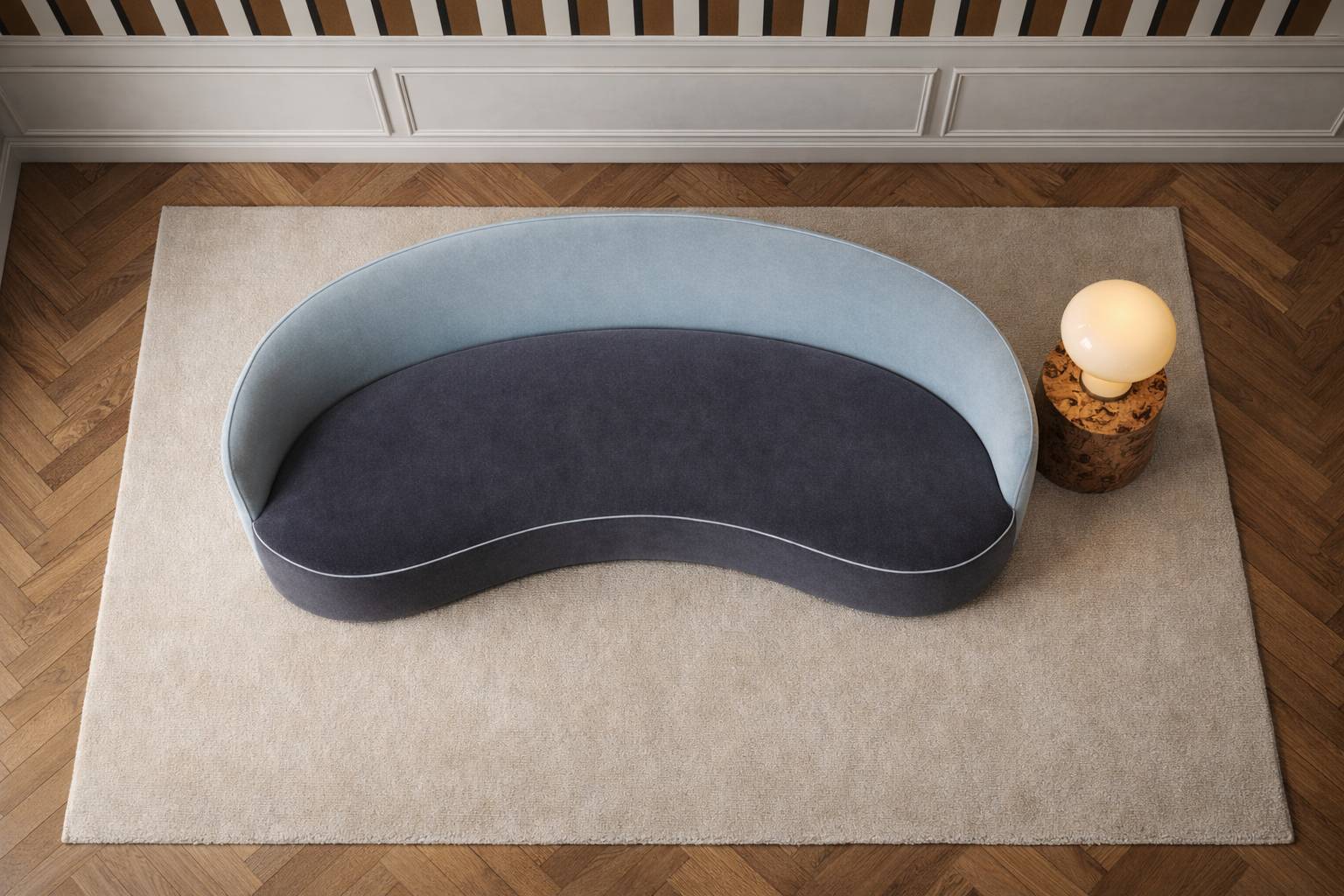
You hold one material language by turning it into artifacts, not intentions. Fix a closed set of finishes and record it in a named finish and material schedule; sign off physical control samples at the start and retain them; build one benchmark mock-up suite; then approve every later submittal against the retained sample. Saint Objets makes every piece to order against that fixed set, so a lobby, a corridor and a suite read as one hand across a multi-year build.
Why One Palette Drifts.
The failure mode is procedural, not aesthetic. Each floor gets specified by a different person at a different moment, and the same oak drifts two tones warmer, the same bouclé arrives in a slightly different weave, and the building stops reading as one idea.
The problem is not that anyone chose badly. It is that there was no fixed reference to choose against. Holding a material language is therefore a control problem, and the answer is a small number of artifacts that make the palette enforceable instead of remembered.
Fix a Closed, Named Set.
The first artifact is a closed set, counted and named. Rather than gesture at a palette, we cap it and give each entry a fixed identifier that every drawing, order and delivery note references. An illustrative set reads as:
- W1 rift oak, W2 smoked walnut, W3 pale ash: three woods.
- M1 brushed bronze, M2 blackened steel: two metals.
- S1 a single honed limestone family: one stone or stone-look family.
- T1 a wool-blend weave family in three colourways drawn from one tonal range: one primary textile family.
If a material is not in the schedule, it does not enter the building, however good the individual sample looks in isolation. The schedule is the single source of truth, and it is a document people sign, not a mood conveyed in a meeting.
A name alone still drifts, so tolerance is written into the schedule. Each entry carries the discipline that keeps repeat runs reading as one material:
- Colour: a target with a stated range around it, so a specifier can measure drift rather than argue about it in daylight.
- Wood and metal: a fixed sheen or gloss band, so W1 stays matte and does not arrive satin on the eighth floor.
- Primary textile: a single dye lot reserved against the full scope at the outset, which protects you from the mid-project lot shift that quietly breaks continuity.
Tolerance is the part most palettes omit, and it is the part that actually decides whether floor twelve matches floor two.

Sign and Retain Physical References.
The third and fourth artifacts are physical. At sign-off we prepare control samples of every entry in the set, agree them, and retain them, so the reference is an object held on file rather than a memory or a photograph.
Then we build one benchmark mock-up room or suite that puts the whole set together at full scale under the real lighting, and that built room becomes the standard every subsequent floor is measured against. New joinery, a re-ordered bench, a replacement chair: all are judged against the retained sample and the benchmark suite, not against the last thing that shipped. The benchmark is where the language stops being a schedule and becomes something you can stand inside and point at.
Gate-Keep Every Substitution.
Those artifacts only hold if substitutions are gate-kept. Over a multi-year build, stock changes and someone will propose an alternative, and the honest ones surface at submittal rather than on site. Every substitution or variation order runs through submittal approval against the retained control sample:
- Check the proposed piece to the named schedule entry.
- Measure its colour to the held range.
- Compare its sheen and weave to the retained sample.
- Approve it into the schedule, or refuse it.
This is the procedural control the failure mode demands. Different people specifying at different moments stops mattering once they are all specifying against the same fixed reference and the same approval gate.
Made to Order, Held to One Schedule.
Made to order is what lets that discipline reach the pieces themselves. Because Saint Objets is made to order in the Emirates rather than pulled from open stock, the same frame profile, the same construction and the same fabric run across a lobby sofa, a corridor bench and a bedroom chair, so the geometry and the touch stay consistent even when the shapes differ.
The reserved dye lot is held against the whole scope from the start, and the control samples we sign are the ones production is held to. Made to order is not a marketing line here; it is the mechanism that keeps the schedule and the retained sample connected to what actually gets delivered.
The judgement left to the architect is knowing where the language should bend rather than break. A back-of-house corridor and a signature suite are not the same brief, so tone and scale can shift while the underlying vocabulary of frame, seam, leg and finish stays fixed, which reads as intentional rather than mismatched. That is the method behind our architectural furniture pieces: the same set, specified once and gate-kept at every submittal, so the pieces sit inside the palette instead of testing it. It is the same method we bring to hospitality projects and to our interior-architecture collaboration with NOYA. Designed in Paris, made in the Emirates, held to one schedule from the first floor to the last.
Explore our made to order collection
Frequently asked questions.
What artifacts actually hold a material language across a building?
Four. A named finish and material schedule that lists the closed set with fixed identifiers and tolerances; physical control samples signed off and retained at the start; one benchmark mock-up room or suite built at full scale under the real lighting; and a submittal-approval gate that every later piece must pass against the retained sample. Saint Objets works to those artifacts and makes each piece to order against them.
How big should the closed set be, and how is drift controlled?
Small and counted. An illustrative set is three woods, two metals, one stone or stone-look family and one primary textile family, each with a fixed identifier used on every drawing and order. Drift is controlled by writing tolerance into the schedule: a colour target with a stated range, a fixed sheen or gloss band per finish, and a single dye lot reserved against the whole scope so the textile cannot shift lot mid-project.
How are substitutions controlled over a multi-year build?
Through submittal approval against the retained control sample. When stock changes and someone proposes an alternative, the proposed piece is checked to the named schedule entry, its colour measured to the held range and its sheen and weave compared to the retained sample, then either approved into the schedule or refused. Because everyone specifies against the same fixed reference and the same gate, different people specifying at different moments no longer breaks continuity.
Why does made to order help with material consistency?
Open stock forces you to accept whatever finish and dye lot is available that week, which drifts over a long project. Because Saint Objets makes to order in the Emirates, the same frame and fabric run across different pieces, the textile dye lot is reserved against the whole scope from the start, and production is held to the same control samples that were signed off at the beginning.