
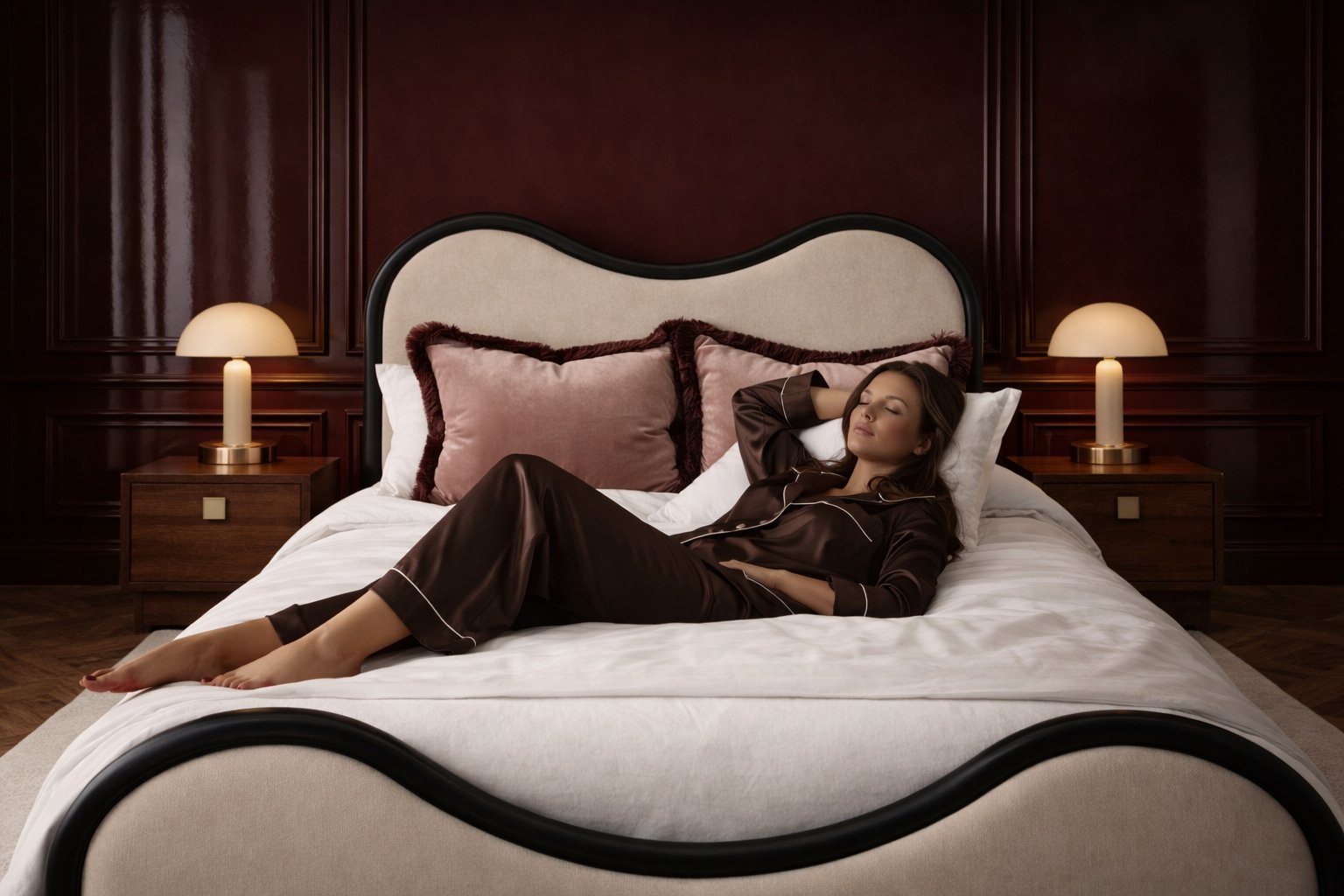
Durability is the only sustainability you can see. A label is a claim; a sofa still in use after its second change of cover is a fact. The rest follows from how a piece is made, where, and for whom.
Made to Order, So Nothing Is Overproduced.
At Saint Objets, the honest case for durability starts with how we make things. There is no stock. Nothing is produced in advance and nothing sits in a warehouse waiting for a buyer; a piece exists only once it has been ordered.
Every commission is designed in Paris and made locally, in our own atelier in the Emirates, built for one specific home rather than a forecast. That single fact removes the least-discussed source of furniture waste: overproduction and unsold stock that gets written off. When one piece is built for one client, there is no surplus to landfill.

Made Locally, So It Travels Less.
Because the piece is made here rather than imported, it also travels a short distance. It goes from our atelier directly to the client's home, so it carries far less transport than a sofa shipped in from a factory on the other side of the world.
We will not dress that up in a slogan or a number, but the comparison is plain: a short journey from a local workshop is simply lighter on the environment than a long one across oceans.
Built to Be Kept, Not Replaced.
The second reason is longevity, and it is the part most eco claims skip. A sofa is built to stay genuinely comfortable for years, so it is kept, not replaced. Framed to be re-covered, it quietly replaces every disposable piece it would have taken to fill the same space over the same time.
We build with safe, non-toxic fabrics, because a healthy home matters to us, and this also keeps chemical emissions indoors low. The fabrics are OEKO-TEX certified and toxic-free.
A Conviction, Not a Marketing Position.
None of this is a marketing position bolted on after the fact. It is a personal conviction of Sarah Koben, our Creative Director, and it is built into how the studio actually works:
- No stock, so nothing is made on speculation.
- Made locally, in our own atelier in the Emirates.
- Kept for years, framed to be re-covered rather than replaced.
- Healthy to live with, built from safe, non-toxic fabrics.
We would rather be specific than sweeping. Durability is not a marketing word here; it is the mechanism. If you want the same thinking applied to how a whole room is specified, our note on low-waste furniture in Dubai covers how made-to-order commissions cut what gets thrown away in the first place.
Frequently asked questions.
Does made-to-order furniture really reduce waste?
Yes. Saint Objets holds no stock. Nothing is produced in advance, so there is no speculative inventory and no unsold warehouse surplus written off and discarded. Each commission is built for one home, which removes overproduction, the least visible source of furniture waste. You commission the piece you will keep.
How does making furniture locally make it a greener choice?
Every Saint Objets piece is made locally, in our own atelier in the Emirates, rather than imported from a factory overseas. Because it is built here, it travels only the short distance from the workshop to your home. That is far less transport than furniture shipped in from the other side of the world, which is a real, plain environmental saving. It is also a personal conviction of Sarah Koben, our Creative Director, that a piece should be made close to the home it is meant for.
What makes a piece durable enough to be the greener choice?
A frame built to be re-covered and kept rather than replaced, and seat comfort that holds up over years of daily use. A sofa that stays genuinely comfortable stays in the home, and a piece that stays in the home replaces nothing over its life. Saint Objets uses hospitality-grade fabrics so pieces survive real, daily use.
Are Saint Objets fabrics low in indoor chemical emissions?
Saint Objets builds with safe, non-toxic fabrics, because a healthy home matters to us, and this keeps chemical emissions indoors low. The fabrics are OEKO-TEX certified and toxic-free.