
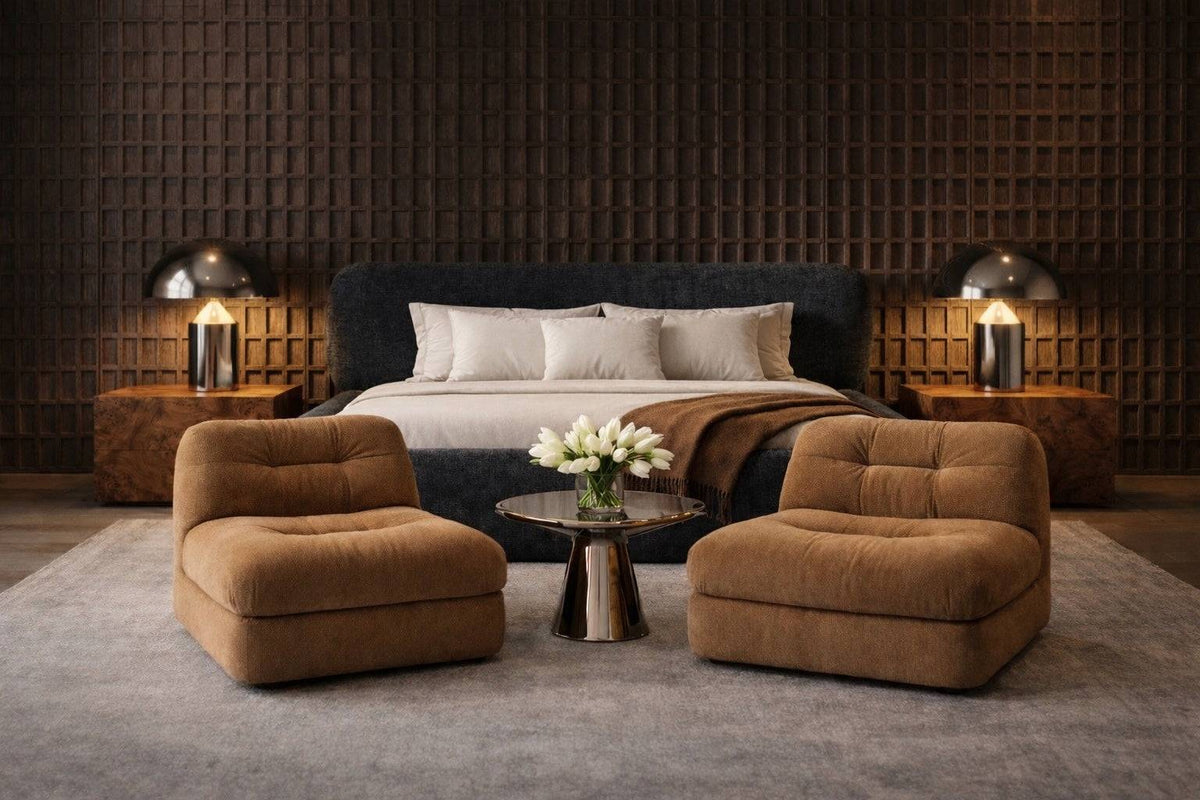
On the Palm, three things happen to a piece of furniture: the sun fades it, the salt air corrodes it, and it is used hard.
Every choice below, from the fabric to the metal under the sofa to the way a frame comes apart for the lift, answers one of those three.
What the Palm Does to Furniture.
The Palm is not a generic apartment brief. Three specific forces decide what survives here, and we design from those facts rather than from a mood board.
- Light: the sun tracks low across open water, and a west-facing living room takes hours of direct, unshaded glare through floor-to-ceiling glass. Pale linen and pale velvet in that path visibly fade and chalk inside a season or two.
- Salt: humidity off the sea carries chloride that pits unprotected chrome, corrodes less considered fixings, lifts unsealed veneer and swells timber that was never kiln-dried.
- Use: most of these homes are lived in part of the year or let short-term, so everything is used hard, cleaned often and photographed constantly.

What We Specify.
We build from the numbers that matter for a sun-facing, sea-facing home, not from a look alone.
- Upholstery: high-performance, hospitality-grade fabrics tested to roughly 40,000 to 100,000 Martindale rubs, a hotel-lobby durability band where a domestic sofa fabric is often only 15,000 to 25,000, and selected for high lightfastness.
- Frames: kiln-dried solid hardwood rather than raw softwood, so they hold their shape in humidity.
- Metal: powder-coated aluminium or stainless steel, not chrome-plated mild steel that pits in salt air.
- Safety: toxic-free water-based lacquers and finishes, chosen to be safe to live with in a sealed, air-conditioned home.
Lightfastness, the scale used to measure how a colour holds under sustained UV before it shifts, is the single most important spec for a sun-facing Palm room. It is why we steer owners away from pale, delicate weaves in the direct-light zone toward tighter, solution-dyed performance constructions that clean with a damp fabric and keep their colour.
Getting It Into the Apartment.
A 3.4m sofa that looks perfect on a plan will not enter most Palm service lifts, and the ones that fit the lift often will not clear the door reveal or the turn out of it. Owners get burned by this more than by anything aesthetic.
Our answer is mechanical, not a promise. Large seating is engineered as knock-down or split-back frames: the piece disassembles into components that pass a standard lift and a standard doorway, then is reassembled in-suite to full size with the joints hidden. That is how a five-metre sectional can reach a high floor without a crane lift up the outside of the building. We measure your lift car, its door opening and the corridor turns before a single component is cut, which is what made to order buys you here before it buys you anything aesthetic.
The Three Palm Layouts Are Not One Brief.
We plan each area to its own exposure, not to a single Palm template.
- The fronds, where the villa-style and single-loaded apartments sit, are the salt-and-sun extreme: many face west into the sunset burn, sit closest to open water, and combine the worst UV exposure with the highest chloride load, so the rub rating, the lightfastness and the salt-safe metal earn their keep hardest here.
- The trunk and Shoreline buildings read differently: units can face inward across the marina and the Palm's own spine rather than straight out to sea, which softens both the direct sun and the salt somewhat, while the tower stacks bring the tight-lift and reveal problem to the front.
- The Signature and tall tower units add deep floor-to-ceiling glass and long uninterrupted sightlines, where proportion and how a piece sits against a curved sea-facing wall matter as much as the fabric.
How to Specify, In Order.
If the home is a short-let, specify for turnover and photography first: the highest rub band you can get, removable and washable covers, darker or solution-dyed tones that hide wear, and modular seating that resets fast between guests. If it is your own home, you can weigh comfort and hand-feel higher, but keep the delicate materials out of the direct-sun path.
Across both, avoid:
- Pale linen or pale velvet in a west-facing window.
- Unsealed or oiled oak that drinks humidity.
- Chrome or chrome-plated legs that will pit in salt air.
Then sequence the buy in order:
- Measure the lift and access.
- Lock the hero pieces first: seating, bed, dining.
- Let secondary and decorative items follow.
Because each piece is drawn to your room, this runs like a fitting, not a shopping trip. We bring the discipline from hospitality fit-outs and short-let interiors where furniture has to survive commercial-grade daily use and constant guest turnover, and from an interior-architecture collaboration with the design bureau NOYA, where pieces are planned into the architecture from the measured plan up. If you want the underlying method before the Palm specifics, our guide to furniture for apartments in Dubai covers the fundamentals this page builds on.
Frequently asked questions.
What furniture actually holds up in a Palm Jumeirah apartment?
Pieces specified for direct sun, salt air and heavy use. Look for upholstery rated to roughly 40,000 to 100,000 Martindale rubs with high lightfastness (a hotel-grade durability band, versus 15,000 to 25,000 for a typical domestic fabric), kiln-dried solid hardwood frames, and powder-coated aluminium or stainless fittings rather than chrome-plated steel that pits in salt. That combination keeps its colour and structure through short-let turnover instead of fading or wearing within a season.
My last sofa would not fit the service lift. How do you solve that?
With engineering, not a promise. Large seating is built as knock-down or split-back frames: the piece disassembles into components that pass a standard lift car and doorway, then is reassembled in-suite to full size with hidden joints. That is how a five-metre sectional reaches a high Palm floor without a crane lift up the building. We measure your lift, its door opening and the corridor turns before any component is cut.
Are the fronds, the trunk and the tower units really different to furnish?
Yes. The fronds are the sun-and-salt extreme: many face west into the sunset burn and sit closest to open water, so rub rating, lightfastness and salt-safe metal matter most there. The trunk and Shoreline buildings can face inward across the marina, softening direct sun and salt, but the towers bring tight lifts and tricky door reveals to the front. The Signature and tall tower units add deep floor-to-ceiling glass, where proportion against a curved sea-facing wall matters as much as the fabric.
Is the furniture safe for a family home or short-let?
Yes, and specifically so. Finishes are toxic-free: water-based lacquers and finishes chosen to be safe to live with. In a sealed, air-conditioned home where the same recycled air is breathed for long stretches, that is a concrete reason to specify it rather than a slogan.
What should I specify first, and what should I avoid?
For a short-let, prioritise the highest rub band, washable removable covers, darker or solution-dyed tones and fast-resetting modular seating. For your own home you can weigh comfort and hand-feel higher, but keep delicate materials out of the direct-sun path. Across both, avoid pale linen or velvet in a west-facing window, unsealed oak that swells in humidity, and chrome legs that pit in salt air. Sequence it: measure access, lock the hero pieces (seating, bed, dining) first, then add secondary items.