
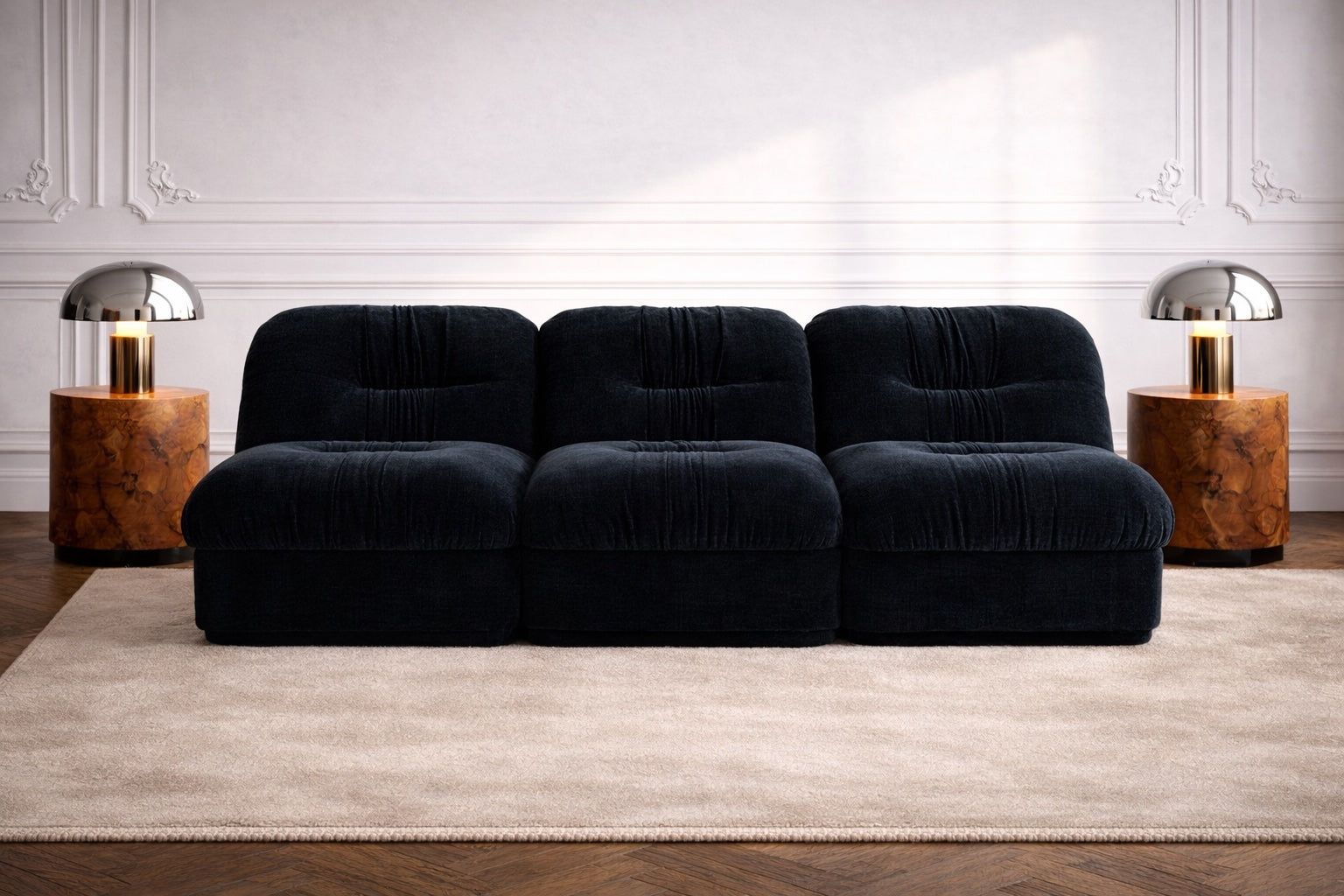
Hold indoor relative humidity in a moderate band and set the AC to a steady, cool room temperature, day and night, even when the home is empty. Keep pieces off the path of direct midday sun. Vacuum weekly on a low, soft setting, rotate loose cushions on a regular cycle, and blot spills at once with the right method for that specific weave. Book a professional deep clean on a regular annual rhythm. Below is the exact routine, fabric by fabric, plus the spill matrix, and how to protect leather and timber frames in dry AC.
What Dubai Does to Upholstery.
Dubai does four specific things to upholstery, and each has a precise answer.
- Direct sun through floor-to-ceiling glass is the real ageing force here. It fades colour and dries fibres over a single summer, and west-facing units (much of the Marina and JBR waterfront) take the worst of the late-afternoon load. Keep a piece off the path of hard light through the middle of the day, or filter it with a solar sheer.
- Heat and humidity swing.
- Fine construction dust and sand that settles out of Dubai air and grinds into a weave like a mild abrasive.
- The summer shutdown, the one owners underestimate. A second home or short-let apartment with the AC switched off in the peak summer months can sit at high internal humidity and extreme heat, which is where mould blooms in cushions and glue lines soften in frames.

Humidity and AC Targets.
Hold indoor relative humidity in a moderate band, neither too dry nor too damp. That single band protects both fabric and frame: too dry, and timber and leather give up moisture and shrink; too damp, and natural fibres hold moisture and can grow mould in a closed room.
Buy a digital hygrometer at any Dubai electronics or hardware shop and leave it on the console near the sofa, not by the AC vent, so you can watch the actual number instead of guessing. Set the thermostat to a steady, cool room temperature and, critically, leave it running at that level day and night rather than cycling the home hot and cold.
In a villa on split units you control this directly. In a high-rise on central district cooling you often cannot switch the cooling off at all, only trim the room thermostat, which actually works in your favour for humidity but means you should watch for over-cooling and condensation on glass.
For any home left empty in summer, do not kill the AC. Leave it holding a mild, moderate setting, or run a standalone dehumidifier, so the room never crosses into the damp-and-hot zone that ruins upholstery unattended.
The Fabrics We Specify.
Because every Saint Objets piece is drawn to your room and made to order, the fabric is chosen for how that room is actually used and lit. These are the families we work in and their real trade-offs under Dubai sun and AC.
- Solution-dyed acrylic, an outdoor-grade fabric where the colour is locked into the fibre before it is spun, is the most sun-stable option and the one to choose for a bright west-facing room or a terrace-adjacent seat. It resists fading and cleans easily, but the hand is firmer and less plush than an indoor velvet, so it reads more casual.
- Performance velvet, a tightly woven pile with a finish that helps it resist water and stains, gives you the depth and sheen of velvet with liquids that bead and blot away. It handles family and short-let use well, but pile can crush and show pressure marks, so it needs the regular nap-lift and cushion rotation to stay even.
- Bouclé, the looped, textural wool-blend that photographs beautifully, is the least forgiving here. The loops catch sharp claws and trap fine dust, and an aggressive rub can pull a loop into a snag, so it belongs in low-traffic, low-sun seating, not the daily family sofa.
- A high-performance woven with a stain-resistant finish is the workhorse where a room needs both softness and easy upkeep.
- A refined vegan leather skips the drying-and-cracking problem real hide has in dry AC.
If you want the deeper reasoning, our guide to performance fabrics in Dubai sets it out.
We specify OEKO-TEX certified fabric. In plain terms, the textile, the yarn, the dye and the finish have been tested against a defined list of harmful substances and cleared.
For a home with young children, or where a sofa sits in a bedroom, that matters: the fabric is OEKO-TEX certified and toxic-free.
The Spill and Stain Matrix.
Blot, never rub: rubbing drives liquid into the pile and can felt or snag the surface. Work from the outside of the mark inward, then treat by culprit and by weave.
- Coffee, tea and kids' juice: blot dry, then lift with cool water and a drop of pH-neutral (mild) soap on a clean white fabric. Safe on performance fabric, linen and velvet. Do not use hot water, which sets the tannin.
- Red wine: blot hard immediately, then dilute with cool water and blot again. On performance fabric and linen you may follow with mild soap. Do not tip salt onto velvet, and never use hot water anywhere.
- Oil and oud oil: do not add water first, it spreads the stain. Lift the excess with a dry fabric, dust the spot with cornflour or talc and leave it a short while to absorb, then vacuum and finish with a barely-damp mild-soap fabric. Oud oil is the classic Dubai culprit and the hardest; on velvet and bouclé, if the mark survives one gentle pass, stop and leave it to a professional rather than risk a ring.
- Ink: press (do not wipe) with a fabric. This is the one place a mild solvent may help, but only on a robust performance weave and only after a hidden-spot test. Never put alcohol or any solvent on velvet (it strips the pile and leaves a permanent watermark), on bouclé (it can dissolve the loop binding), or on linen (it leaves a hard tide line).
Avoid on everything: bleach, undiluted white vinegar, ammonia-based window sprays, melamine eraser pads, and any harsh solvent used blind. On natural velvet and bouclé, also avoid all solvent cleaners and excess water; keep those weaves to dry methods and the lightest damp touch.
A light hand-held steam pass is safe to lift and reset the pile on most performance wovens and performance velvet. Do not steam natural velvet, bouclé or linen: the heat and moisture flatten pile permanently and can shrink or watermark natural fibres.
Leather, Frame and the Weekly Rhythm.
Dry AC is as hard on the structure as sun is on the surface. Real leather loses natural oils in a low-humidity room and will eventually craze and crack: wipe it with a dry fabric on a regular monthly rhythm, feed it with a leather conditioner a few times a year, keep it out of direct sun and off the AC-vent draught, and hold the moderate humidity band. Vegan leather does not dry out the same way and needs only a damp wipe.
Seat cushions compress with use, so rotate and flip them on a regular cycle and give them a firm plump so they recover evenly. Feather and down cushions need more: plump and reshape them often and give a full shake-out weekly, or they settle flat on the sides you sit in. Timber frames and their joints are glued and jointed to hold, but long stretches at very low humidity can dry the wood and let a joint work loose, which shows up as a faint creak. The same moderate humidity band prevents it, and if you hear a creak, have it checked before it opens up rather than living with it.
The weekly and annual rhythm keeps all of it even:
- Vacuum weekly on a low, soft, brush setting, working with the nap, to clear the dust and sand before it does any cutting.
- Rotate and flip all loose seat and back cushions on a regular cycle so wear, pressure and light exposure even out; hold to a set rhythm, since anything vaguer lets one side age ahead of the other.
- Wipe leather on a monthly rhythm and condition it a few times a year.
- Book a professional deep clean on a regular annual rhythm, sooner for a heavily used family sofa or a short-let that turns over guests.
- Keep the exact fabric reference supplied with your piece, so any cleaner you bring in works to the right method rather than guessing.
Explore our made to order collection
Frequently asked questions.
What humidity and temperature should I keep my home at to protect a bespoke sofa in Dubai?
Hold indoor relative humidity in a moderate band, neither too dry nor too damp, and set the AC to a steady, cool room temperature, running day and night rather than cycling hot and cold. Too dry, and leather and timber frames dry and can crack; too damp, and natural fibres hold moisture and can grow mould. A digital hygrometer on the console near the sofa lets you actually watch the number instead of guessing.
Which fabric should I choose for a bright, west-facing Dubai apartment?
For a west-facing room that takes hard late-afternoon sun, solution-dyed acrylic is the most sun-stable choice, because the colour is locked into the fibre and resists fading, and it cleans easily. Performance velvet gives more plushness with liquids that bead and blot, but needs regular nap-lifting and cushion rotation. Keep natural velvet and boucle out of direct-sun, high-traffic positions, since boucle loops snag and trap dust and natural velvet crushes. We choose the fabric for your specific light and use when the piece is drawn to your room.
How do I get oud oil, red wine or coffee out of my upholstery, and what should I never use?
Always blot from the outside in, never rub. Coffee, tea and juice lift with cool water and mild soap (never hot water, which sets the stain). Red wine: blot and dilute with cool water, add mild soap only on performance fabric or linen. Oil and oud oil: no water first, dust with cornflour or talc to absorb, then vacuum and finish with a barely-damp mild-soap fabric. Never use bleach, vinegar, ammonia sprays or melamine pads on anything, and never put solvent or alcohol on velvet, boucle or linen. If an oud-oil mark survives one gentle pass on velvet or boucle, stop and call a professional.
Is steam cleaning safe on my bespoke upholstery?
A light steam pass is safe on most performance wovens and performance velvet, and it helps reset crushed pile. Do not steam natural velvet, boucle or linen: the heat and moisture flatten the pile permanently and can shrink or watermark natural fibres. When in doubt, match the method to the fabric reference supplied with your piece.
Will dry AC crack my leather sofa, and how often should I re-plump cushions?
Yes. Real leather loses its natural oils in a low-humidity AC room and can craze and crack over time. Wipe it dry on a monthly rhythm, condition it a few times a year, keep it out of direct sun and off the vent draught, and hold humidity in a moderate band. Vegan leather does not dry the same way and needs only a damp wipe. Rotate and flip seat cushions on a regular cycle; feather and down cushions need plumping often and a full shake-out weekly, or they settle flat where you sit.
I leave my Dubai apartment empty in summer. What should I do with the AC?
Do not switch it off. A closed home with the AC off through the peak summer months can climb to high humidity and extreme heat, which is where cushions grow mould and frame joints soften. Leave the AC holding a mild, moderate setting, or run a standalone dehumidifier, so the room never crosses into the damp-and-hot zone. This matters most for second homes and short-let apartments that sit unattended between guests.
How often should a bespoke sofa be professionally deep-cleaned in Dubai?
On a regular annual rhythm for normal use, and sooner for a heavily used family sofa or a short-let that turns over guests, because Dubai's fine dust and sand load a weave faster than a cooler, cleaner climate would. Between deep cleans, vacuum weekly on a low soft setting and rotate cushions on a regular cycle. Keep the fabric reference supplied with your piece so any cleaner works to the correct method.